
How to Water Roses, Hydrangeas, Natives and Orchids in Australian Garden

How to Water Roses, Hydrangeas, Natives and Orchids in Australian Gardens
I killed three hydrangeas in our Kingscliff garden before I figured out what I was doing wrong. Three. And I run a flower business (sort of, Andrew would say I run the people side and he runs the nerdy side, which is probably fair). The thing is, knowing that hydrangeas need water and knowing how to water them are completely different problems, and I spent two summers proving that the hard way.
This guide is the one I wish I had found back then. Not a list of generic tips written by someone who has never held a hose in January heat, but actual watering advice for actual Australian conditions, from someone who spent fifteen years buying the results of good and bad watering at the wholesale markets.
That someone is Anna.
Anna
Qualified florist, 15+ years on the bench, trained in North CarolinaAnna is our qualified florist. Trained in North Carolina, worked on the bench for over fifteen years, then joined us when we were still running the business out of our converted double garage in Pottsville. Not a gardener by trade. Something more useful for this conversation: the person who spent a decade and a half picking up stems at Flemington Market and knowing, by feel, which roses came from growers who watered properly and which ones were going to collapse in three days. The growing end and the cutting end of the same plant. Anna knows both.
Anna does the talking on the technical bits. I do the bits where I admit to killing things.
Before We Talk About How Much to Water: When You Are Allowed To
If you have moved to Australia from overseas, or you have lived here your whole life but never thought about it, this section matters. Most states have permanent water restrictions that affect when and how you can water your garden. Every competitor guide skips this part because they are written in Oregon or Oxfordshire. We live here.
New South Wales (Sydney and regional): Gardens can be watered before 10am or after 4pm using watering systems. A hand-held hose with a trigger nozzle can be used any time. Drip and smart irrigation systems are permitted during restricted hours.
Victoria (Melbourne): Watering systems between 6pm and 10am only. Hand-held hose, watering can, or bucket any time, but the hose needs a trigger nozzle.
Queensland (Brisbane and South-East QLD): Varies by council but generally no watering between 10am and 4pm. A trigger nozzle on a hand-held hose is fine any time.
Western Australia (Perth): The tightest rules in the country. Two-day-a-week sprinkler roster, assigned by house number, with a complete sprinkler ban from June to August. Same rules apply if you are on bore water.
South Australia (Adelaide): Sprinkler systems on alternate days only. No restrictions on hand watering if the hose has a trigger nozzle fitted.
Tasmania: Generally no permanent restrictions, but temporary restrictions can apply during dry summers.
Anna's take
The cut flowers arriving at your florist's shop come from commercial growers who operate under different water rules. They have irrigation exemptions, climate-controlled greenhouses, automated drip systems running around the clock. The roses you buy from a florist were grown in conditions your backyard cannot replicate under residential restrictions. You can still grow beautiful flowers at home. You just need to be smarter with water, not more generous.
Drip irrigation and hand watering with a trigger nozzle are compliant in every state. A sprinkler on a timer, which is what most people default to, is the worst method for flower gardens (we will get to why in a moment). Starting with the legal reality saves you from building watering habits you will have to break.
Quick Reference: Every Flower at a Glance
If you are here for one specific flower, this table has your answer. The detail is further down.
| Flower | How Often | Method | The One Thing Most People Get Wrong |
|---|---|---|---|
| Roses | 2-3x/week deep soak | Drip or soaker hose at base | Overhead watering. Breeds mildew. |
| Hydrangeas | 2-3x/week (daily in pots) | Soaker hose at base | Assuming afternoon wilt always means underwatering. |
| Australian Natives | Minimal once established | Hand watering during dry spells only | Overwatering. They rot from kindness. |
| Orchids | 1-2x/week, soak and drain | Soak pot, drain completely | Daily watering like a pot plant. Kills them. |
| Lilies | When top 7cm partly dry | Thorough soak, let drain | Watering foliage. Pollen stains, rot risk. |
| Lavender | Every 2-3 weeks when dry | At base, thoroughly | Too much water. Hates wet feet. |
| Bougainvillea | Let soil partly dry between | Thorough, infrequent | Too much water kills the flowers, not the plant. |
| Annuals | When top 2-3cm dry | Any method | Underwatering containers in summer heat. |
| Sunflowers | 2-3cm/week, more when flowering | Base watering only | Overhead watering rots the seed heads. |
| Gerberas | When top 5-7cm dry | Morning, at base | Water on the crown or flowers. |
| Succulents | When soil fully dry | Thorough soak, then nothing | Frequent light watering. Wrong approach. |
Three Rules That Apply to Every Flower
Before the species-by-species guide, three principles hold true for everything you grow.
Water the soil, not the plant. Water sitting on leaves and petals in warm weather is an invitation to fungal disease. Anna watched it destroy commercial rose stock overnight. "Grey mould shows up after one night of wet foliage in humid weather," she says. "One day the petals look perfect. Next morning, fuzzy grey patches everywhere. It is almost always because the water did not drain off the leaves before dark." Base watering, always. Overhead sprinklers are the main offender.
Deep and infrequent beats shallow and often. This is the one rule that separates a garden that survives January from one that does not. Shallow daily watering trains roots to stay near the surface. When a 38-degree day hits and the top five centimetres of soil dry out in an hour, those shallow roots have nothing to pull from. Deep watering, a proper soaking that reaches 15 to 30 centimetres down, trains roots to chase the moisture downward. Anna could tell the difference at market. "The roses from deep-watered growers had thicker stems. You could feel it picking them up. The shallow-watered stock bent too easily. After a while I just stopped buying from those growers."
Morning is best. Water before 10am. The soil absorbs it before the heat accelerates evaporation, the foliage dries before evening (reducing fungal risk), and in most states you are compliant with restrictions. There is a colour reason too: Anna noticed that growers who watered before the UV peak produced flowers with deeper, more stable pigment. Direct sunlight breaks down the compounds that create red and purple colour in petals. Morning watering while the light is still low protects both the plant and the bloom. Evening watering is acceptable if morning is not possible, but avoid it for roses and anything prone to mildew. Midday watering is waste. Half of it evaporates before it reaches the roots. (For cut flowers already in a vase, our separate guide covers what to do each morning to keep them going.)
One more: mulch matters. Five to seven centimetres of organic mulch around the base of your plants holds moisture, suppresses weeds, and keeps root zones cooler. Never mulch onto dry soil. Water first, mulch second. And keep the mulch a few centimetres away from the stem to prevent rot at the crown.
Know your soil. Sandy soil (Perth, most coastal areas) lets water pass straight through. You need a wetting agent, heavier mulch, and more frequent watering. Clay soil (western Sydney, Melbourne suburbs, parts of Adelaide) does the opposite: water pools on the surface, runs off, and drowns roots below. Break it up with gypsum and water slowly so it soaks rather than sheets. If you are one of the lucky ones with loam, the soil holds moisture and drains the excess without help. Most Australian gardeners are not that lucky.
Flower-by-Flower Watering Guide
Roses
The most popular garden flower in Australia and the stem Anna has the strongest opinions about. Water roses to a depth of 15 to 30 centimetres, two to three times a week in summer. Daily in extreme heat. First-year plants need more: Treloar Roses in Victoria recommend 10 litres two to three times a week for the first year, then one thorough soak per week once established.
Water at the base. Soaker hose or drip irrigation laid along the bed is ideal. Never overhead. Wet rose foliage in warm, humid weather breeds black spot and powdery mildew faster than any other garden plant.
If your roses are wilting in the cool of the morning, they are underwatered. Afternoon wilt in 35-degree heat is normal heat stress and not necessarily a watering failure.
Anna's take on roses
Roses are the stem where watering shows up most clearly at the other end. I used to check the sepals at market. When they have folded back to about ninety degrees from the bud, the flower has stored enough sugar to open fully. Tight buds look fresher but they often lack the energy to bloom. That energy comes from the roots, and the roots come from deep watering. The growers who cut corners on water produced stems that collapsed by day three in the vase. Same variety, different growing, completely different result.

The roses in this bunch come from growers who water this way. You can see it in the stem thickness when the arrangement arrives. Six weeks of deep irrigation is sitting in that vase.
Hydrangeas
I have to be honest about this one. Hydrangeas in Australian summer heat are a battle. Even people who know what they are doing lose them in a bad January week. They are the most rewarding garden flower when they work and one of the most frustrating when they do not.
Soak thoroughly two to three times a week in summer for in-ground plants. Daily for pots. Water at the base, preferably with a soaker hose. In cooler cities like Melbourne and Hobart, natural rainfall often handles in-ground hydrangeas through winter and spring.
The important bit: afternoon wilting in hot weather does not always mean your plant needs water. Hydrangeas wilt as a heat response even when the soil is moist. If the soil is damp at root level and the plant perks up by evening, it is coping. If it stays wilted into the next morning, give it a proper soak.
The rescue trick, and this one has saved me more than once: if a cut hydrangea head has wilted badly, submerge the entire bloom in cool water for thirty minutes to an hour. The massive petal surface area absorbs water directly. It does not always work, but when it does the head goes from flat to upright inside the hour.
Anna's take on hydrangeas
Hydrangeas have the highest surface-area-to-volume ratio of any commercial stem. Every one-degree rise above 21 degrees increases water loss through those petals by close to seven per cent. At 28 degrees with low humidity, a hydrangea head can collapse within hours. I used to tell callers in Brisbane and Darwin that hydrangeas were a gamble unless the house had air conditioning. In Hobart? Send them without a second thought. The cool rooms in those older Tasmanian homes slow everything down.
Australian Natives (Grevillea, Banksia, Protea)
Here is the irony. These plants survived thousands of years of Australian drought. They cannot survive a suburban sprinkler.
Banksias, grevilleas, and proteas evolved in nutrient-poor, well-drained soils. Their root systems (proteoid cluster roots, if you want the technical term) are designed to pull maximum nutrition from minimal water. Waterlogging suffocates them. Too much water and they rot from the roots up. People kill natives with kindness more often than they kill them with neglect.
At planting, water well with a seaweed solution, then twice a week for two to three weeks, then once a week for a month. After that, they should be established. Supplementary watering only during prolonged dry spells.
Anna's take on natives
We had a partner florist near the bush who grew natives in her garden. She never watered them after the first season. They were the healthiest plants I have ever seen. The commercial native growers down in the Dandenong Ranges operate the same way. Minimal irrigation once established. The plants are designed for it. The cut natives that lasted longest in arrangements came from growers who understood that less water means tougher cell walls. Overwatered banksias produce soft growth that wilts in the vase.
If you love growing natives at home, you will appreciate seeing what our florists do with native flowers in their arrangements. Same tough, beautiful stems.
Orchids
More orchids die from overwatering in Australian homes than from any other cause. Anna heard it on the phones constantly during her years taking calls at our Pottsville office.
Anna on orchids
Nine out of ten callers asking why their orchid died were watering it every day like a pot plant. Orchid roots are aerial roots wrapped in a spongy tissue called velamen. They absorb moisture from the air. They evolved growing on tree branches, not in soil. Sitting in wet potting mix is the fastest way to rot them.
The method: water once or twice a week depending on the season and your climate. Soak the pot thoroughly, then drain it completely. Never let the pot sit in a saucer of water. Let the potting medium dry slightly between waterings. The roots should be silvery-green when dry and bright green after watering.
Avoid getting water into the crown (where the leaves meet the stem). Crown rot kills orchids and it is almost impossible to reverse.
In dry, air-conditioned homes, set the pot on a pebble tray with water in the base (below the pot level) to add humidity around the plant. The air conditioning sucks moisture from the air faster than the roots can replace it.
Lilies
Being called Lily's Florist, we have a soft spot (Andrew says it is a marketing advantage, not a soft spot, but he would). Water when the top seven centimetres of soil are partly dry. Give a thorough soak, then let it drain fully. Lilies hate wet feet but they also hate drying out completely, so consistent root-level watering is the balance.
Thick mulch over the bulbs keeps them cool in summer and insulated in winter. Avoid watering directly onto the foliage or flowers. The pollen stains everything it touches (Anna's advice on cut lilies is to remove the anthers before the pollen disperses, and the same logic applies to garden lilies near washing lines or outdoor furniture).
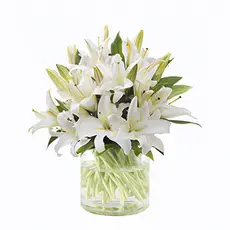
The oriental lilies in this bunch arrive as fat green buds and crack open over four or five days. The energy to do that was stored in the bulb months earlier, fed by consistent watering at root level.
Lavender
The next five flowers need less explaining and less water. Which is good, because I have killed fewer of them.
Lavender is the drought champion. Established plants survive on rainfall through most of the year. During extended dry periods, water every two to three weeks. That is it.
Lavender has a long taproot. Water at the base, thoroughly when you do water, and then leave it alone. The number one killer is poor drainage. Wet feet equals root rot. If your soil is heavy clay (hello, western Sydney), amend the bed with coarse sand or gravel before planting. In humid climates along the Queensland coast, make sure the plant has excellent air circulation around the foliage.
If your lavender is in a container, water only when the potting medium has fully dried out.
This is the flower to recommend to anyone who says "I kill everything." Lavender forgives neglect. It punishes fussing. Anna noticed the same thing from the supply side: the dried lavender that came through Flemington with the strongest scent was always from the driest farms. Less water concentrates the oil in the stems.
Bougainvillea
Thorough but infrequent. Allow the soil to partially dry between waterings. In pots, every two to three days in summer, weekly in cooler months. Free-draining soil is non-negotiable.
Here is the trick most people do not know: bougainvillea flowers more when stressed. Constantly wet soil produces leafy green growth at the expense of blooms. The dry-down cycle between waterings triggers the plant to flower. If your bougainvillea is all leaves and no colour, you are probably watering too much. Andrew built most of the drip system in our Kingscliff garden but the bougainvillea is the one plant he leaves off the line. It flowered best the summer we forgot about it for three weeks, which tells you everything.
Annuals (Petunias, Marigolds, Zinnias)
Water when the top two to three centimetres of soil are dry. About two to five centimetres of water per week from rain and supplemental watering combined. Container annuals in Australian summer heat may need watering twice a day. Wilting and fewer blooms are the first signs of underwatering.
Annuals are the family garden flowers. They bloom fast, they are forgiving, they teach kids what gardening looks like when it works. Asha grew sunflowers in the Pottsville garden when she was six. They were the one thing I could not ruin. Do not overthink annuals.
Sunflowers
Water at the base, never overhead. Once the flower heads form and start filling with seeds, overhead watering rots the seeds before they mature. Sunflowers are thirstier than they look during the growth phase. Two to three centimetres of water per week minimum, and more during flowering. In containers, check daily in summer.
They grow fast, they follow the sun (literally, young heads track east to west daily), and they produce one of the few flowers that genuinely makes people smile on the doorstep. Anna used to say the only sunflower complaint she ever took on the phones was about the pollen staining a white tablecloth.
Gerbera Daisies
Water when the top five to seven centimetres are dry. Morning only, at the base. Never get water on the flowers or foliage. Gerberas are prone to stem and root rot from overwatering and crown rot from water sitting in the leaf rosette.
Drooping leaves and browning edges mean underwatering. Mushy stems at the base mean overwatering. The line between the two is thinner than you would think. Anna saw the same problem on the bench: gerbera stems are hollow, no woody tissue at all. Bacteria colonise them faster than any other commercial flower. The same vulnerability that makes them tricky in a vase makes them tricky in the ground.
Succulents and Cacti
Allow the soil to dry out completely between waterings. When you do water, soak thoroughly. Think of it as mimicking a desert flash flood: intense moisture followed by long dry periods.
Never leave a succulent standing in a saucer of water. Use a fast-draining cactus mix, not regular potting soil. In winter, most succulents are semi-dormant and need almost no water at all.
The best plants in the garden for anyone on strict water restrictions (Perth, we are looking at you). Anna used succulents as filler stems in arrangements for coastal and dry-climate deliveries. "They survive anything. I have seen echeveria cuttings sit on a workbench for a week with no water and still root when they finally hit soil. The plant stores everything it needs in the leaves."
Irrigation Methods: Which One for Flower Gardens
Drip irrigation is the best method for established flower beds. Slow, consistent water delivery directly to the root zone. Minimal evaporation. Restriction-compliant in every state. Anna backs this from the supply side: "The best growers at Flemington all use drip. It is the only way to get water deep without losing half of it to evaporation." Andrew installed ours at home from a hardware store kit and a Saturday afternoon. The whole system cost less than two dead hydrangeas, which is his way of looking at it.
Soaker hoses are a solid middle ground. Lay them along the bed, cover with mulch, and let them run for 30 to 45 minutes. Effective for rose beds and borders. Ground-level delivery means minimal disease spread.
Hand watering with a trigger nozzle gives you the most control. Good for containers, individual specimens, orchids, and spot watering. Permitted any time in most states. The trade-off is time and labour.
Sub-irrigation (wicking beds) is the option for the time-poor gardener. Consistent moisture from below via capillary action. No surface evaporation. Excellent for raised beds and container gardens.
Sprinklers are the worst option for flower gardens. They soak foliage (mildew and rot risk), splash soil onto lower leaves (spreading fungal spores), waste water through evaporation, and are the most restricted method under water rules. If you currently water your flowers with a sprinkler, switching to drip or a soaker hose will likely improve the health of your garden more than any other single change.
The Seasonal Watering Calendar
Summer (December to February): The danger season. Water before 10am. Check mulch depth. Container plants may need twice-daily watering. Shade cloth over vulnerable species during extreme heat events. Anna saw the pattern every year at market: "The supply dipped every January. Home growers lost stock to the heat. The commercial growers with automated irrigation survived. The backyard growers who hand-watered when they remembered lost half their crop."
Autumn (March to May): Rainfall returns in many areas. Reduce supplemental watering as rain picks up. Watch for botrytis on roses as humidity rises with cooler nights. Good time to plant new stock. Roots establish before winter without the stress of summer heat. Anna rates autumn stock highest: "The stems with the deepest colour at market come from growers who timed their autumn watering well."
Winter (June to August): Most established plants need minimal supplemental water. Perth's sprinkler ban runs through these months, which suits garden plants fine. Do not water frost-tender plants in the evening. Wet roots plus overnight frost equals ruptured cells at the root level. The damage stays invisible until spring. Anna's advice: "Overwatering in winter kills more garden plants than frost does. Wet cold soil is worse than dry cold soil for root health."
Spring (September to November): The transition that catches people out. Anna calls it the October surprise. "Three weeks of mild weather, everyone relaxes, then a 35-degree week hits and everything that was not properly hydrated crashes." Gradually increase watering as temperatures rise. Do not jump from zero supplemental water to daily overnight. Watch newly planted stock carefully during those first October heat spikes.
Climate Zone Quick Guide
Tropical (Cairns, Darwin, Townsville): Morning watering is not optional. Afternoon humidity plus wet foliage at night equals fungal disaster. Avoid overhead watering entirely for roses and most flowering plants. Drainage is the primary issue during wet season.
Subtropical (Brisbane, Gold Coast, Northern Rivers): Transition zone. Summer humidity demands attention to fungal risk in the shoulder months (March to April, October to November). Mulching does double duty: moisture retention in winter dry spells, drainage in summer rain.
Temperate (Sydney, Melbourne, Adelaide, Canberra, Hobart): The widest variation. Hot summers, cold winters, and water restrictions that matter most here because the populations are largest. Frost risk for tropical species in Canberra and Melbourne. Timing watering to match the season transition is the single biggest skill.
Arid (Perth inland, western NSW, Broken Hill, Mildura): Water is the limiting factor. Full stop. Drought-tolerant species are the only viable option without irrigation. In Perth, soil wetting agents are almost mandatory for the hydrophobic sandy soil that repels water on contact. Anna's inland transpiration insight applies: "The air sucks moisture out of everything. A flower that lasts ten days in Brisbane gets five in Dubbo if the watering is not right from the start."
Coastal (all beachfront suburbs): Salt spray compounds every challenge. Sandy soils drain fast, needing more frequent watering and heavier mulch. Wind accelerates evaporation. For cut flowers in coastal homes, Anna recommends waxy-cuticle stems (orchids, succulents) over soft petals. The same principle applies to garden plants. Soft-petalled flowers struggle in salt air regardless of how well you water them.
FROM THE GARDEN TO THE VASE

"I was concerned that the delivery would happen when the family was out and they would be left to roast in the heat. We made a contingency plan in case that happened but I need not have worried."
Annie, verified customer | Oriental Lilies Bunch | October 2025 | View on Feefo
Send the Same BunchAnna, Qualified Florist
Annie did something most people do not think to do. She rang the florist and planned for the heat. The same science that kills an underwatered rose in a January garden kills a cut lily on a hot doorstep. Oriental lily buds arrive closed. They need three to five days to crack open, and that opening runs on stored sugar from the bulb. If the bunch sits in 35-degree heat for two hours before someone brings it inside, that sugar burns through faster and the blooms never fully open. Annie's contingency plan protected the part of the flower's life that the grower spent months building with proper irrigation and careful timing.
One thing to know about this product: if the bunch looks smaller than the photo when it arrives, wait. The buds open in sequence over the week. By day four the arrangement is twice the size it was at the door. Maree, another customer, wrote that she "thought it would have been a bit more than what was received." She was seeing the bunch at its starting point, not its peak.
A Note From the Flower Delivery Side
If all this watering talk has made you want to enjoy flowers without the garden maintenance, that is what we are here for. Our Florist's Choice range lets a partner florist near you select the best stems available that morning and build something from scratch. No watering required. Order by 2pm weekdays or 10am Saturdays and it is there the same day.
Related Guides


* The Kingscliff shop where it all started. We bought it in 2006 and spent the first year saying sorry to customers because we did not know what we were doing.
Blog Categories
Can't decide?Ring us, we pick the flowers with you.
Call Us NowGive us a call and one of our friendly Australian team will pick the right flowers with you. It takes two minutes.
1300 360 4697am-6pm weekdays. Australians answer the phone.