
Cart is empty
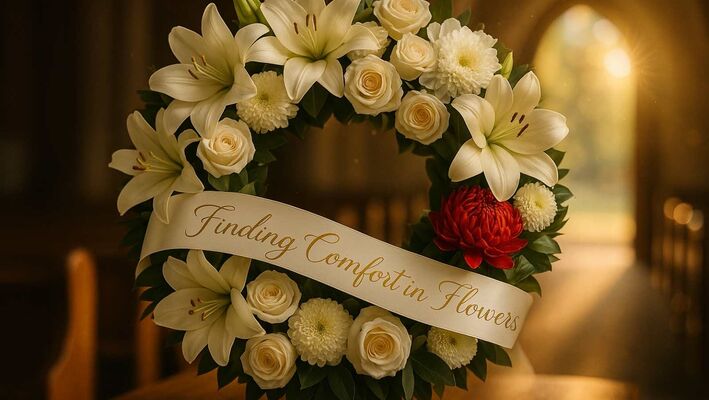
Someone you know has died and you are sitting at your desk, or in your car, or on the edge of the bed, trying to decide what kind of flowers to send. It is 9.30am or it is 11pm, the funeral is in 36 hours, and nobody else is going to do this for you. Flowers will not fix it. You already know that. But they will say something on your behalf when you cannot find the words yourself, and after seventeen years of taking these calls I can tell you that the family always notices what arrived and what did not. They notice the wreath that came from the workplace, the sheaf that came from interstate, and the gap where someone everyone expected to send something did not.
If the funeral is in two days, you have time to read this. If it is this afternoon, scroll down to the six products at Part Six, ring us on 1300 360 469, or both at once. We answer sympathy calls before everything else.
I took sympathy calls from our shop in Kingscliff for the first three years we were in business, then from our home office in Pottsville. Anna joined us in 2010 and ran the phones from Pottsville from April 2010 through to June 2013, somewhere between ten and fifteen thousand calls. Before that she spent fifteen years on the bench in Auburn, North Carolina, building sympathy arrangements for funerals she would never attend, for families she would never meet. The expertise in this guide is hers. The framing is mine. Andrew checks the numbers and asks the questions neither of us thinks to ask.
What you will find in here is different from the lookup tables you have probably already scrolled past today. We will tell you what flowers to send, but we will also tell you what florists actually do with those flowers, why some hold up at a chapel service and others do not, what the family does with the arrangement after they bring it home, and where every Australian funeral tradition we have come across draws its lines. None of this is theoretical. All of it is from the phones and the bench, with one exception: the operational stuff is from Andrew, and he will tell you himself when he gets to it.
If you would rather speak to a person, ring us on 1300 360 469. The team can walk you through it in five minutes. Order before 2pm weekdays for same-day delivery. The full sympathy range starts at $74.50 and the standard funeral wreath and sheath formats sit between $145 and $155. Now, the long version.
Part One
What Flowers Do You Actually Send
There are eight flowers that do almost all the work in Australian sympathy floristry. Some of them you have heard of. Others you probably have not, or you have heard of them but assume they are old-fashioned. They are not. Florists keep reaching for the same stems for funerals because those stems keep doing the job: holding up through a service, surviving the heat in a chapel, carrying the right symbolism without needing the family to read a card to understand it. Here is the working list, in roughly the order Anna pulled them from the buckets at the wholesale market.
Lilies
Oriental lilies are the most recognisable funeral flower in Australian commercial floristry. White, fragrant, large enough that two or three stems carry an entire arrangement. They symbolise the restored innocence of the soul in the Christian tradition, but the practical reason florists love them is that one stem produces three to five blooms that open across a week, so the arrangement keeps changing through the service and into the home afterlife. Asiatic lilies look similar but carry no fragrance, which makes them the better choice for small chapel rooms and home arrangements where Oriental scent would overwhelm. White is the traditional sympathy colour for both. Pink Orientals (often labelled Stargazer) read as warmer and more personal, which is why daughters tend to choose them for their mothers.
Anna on the lily problem
The pollen from an Oriental lily stains. Not "comes off in the wash" stains. Permanent. A florist who knows what they are doing pinches the orange anthers off the moment a bloom starts to open, before the pollen powders. If yours arrive with the anthers still on, you can do it yourself with a tissue. Do not wait until you can see the orange dust on the white roses underneath. By then the dust is also on the casket lining and the mourner's suit jacket nearest the arrangement. The anther removal also extends the life of the bloom by about a third because once a lily has been pollinated it begins shutting down. No pollination, no shutdown.
Roses
White roses are the standard for formal sympathy. They read as pure, restrained, and emotionally neutral, which is exactly what you want at a service where you do not know everyone in the room. Pink roses say warmth and remembrance. Yellow roses say friendship and joy, which makes them a strong choice for a celebration of life or a service for someone who lived loudly. Red roses are reserved for the closest relationships: a spouse, a partner, occasionally a parent. A red rose at the wrong service reads as either declarative or out of place, so the rule of thumb is that if you are wondering whether red is appropriate, it probably is not.
Anna on rose stage
The most common rose problem in sympathy work is the wrong stage of opening. Tight buds at the service look stingy, like the sender skimped. Fully blown roses drop petals on the casket and the chapel floor inside two hours. The right stage is half-open to three-quarter open, sepals reflexed back to about ninety degrees from the bud, outer petals relaxed but the centre still structured. A florist who knows what they are doing pulls roses at that stage from the bucket and rejects the rest. If the roses arrive too tight, they will not open in time for the service. If they arrive too open, they will not survive it. The window between the two is six to eight hours, and the florist times the build around it.
Chrysanthemums
The flower most underrated by everyone except florists. White chrysanthemums symbolise sympathy and honour in Australian tradition. In Italian, French, and many Eastern European cultures, they are exclusively funeral flowers. In Chinese, Vietnamese, and Japanese culture, white and yellow chrysanthemums are the standard funeral choice. Florists reach for them constantly because they outlast every other stem in commercial floristry. Two weeks plus in a vase, often longer. In a wreath that needs to survive a service, then a graveside committal, then a day or two on a headstone, chrysanthemums are the insurance policy.
Anna on chrysanthemums
I had the same call hundreds of times. Someone wanted to send chrysanthemums as a birthday gift to a Chinese colleague, or as a get-well bunch to a Vietnamese friend. I always redirected. In Chinese, Vietnamese, and Japanese culture, chrysanthemums are funeral-only. Send them to a Chinese household for a birthday and the message you are sending is the opposite of what you intended. The reverse is also worth knowing. If you are sending to a Chinese family for a funeral, white and yellow chrysanthemums together are the standard, and a wreath of them is the most respectful thing you can do. The same flower that would offend at a birthday is the right answer at the funeral.
Carnations
Carnations get dismissed as old-fashioned by people who have not watched them outlast roses by ten days in a vase. The bench florist's view is the opposite of the supermarket view. White carnations symbolise pure love and innocence. Pink represents a mother's undying love, which is why they appear in so many tributes from adult children. Red signals deep admiration. The vase life is exceptional. Two weeks in a vase, longer if conditioned properly. They take heat well. They do not bruise easily. In a sheaf or a wreath, they fill space without competing for visual attention with the focal lilies and roses.
Orchids
Cymbidium orchids are the premium sympathy stem. Each spike carries six to twelve individual blooms that open progressively, so a single stem in a vase delivers visual interest for three weeks. Phalaenopsis orchids (the moth orchid) are popular as living plants for the family home, with blooms that hold for six to ten weeks. White Dendrobiums (also called Singapore orchids) cascade and arch, which is why florists reach for them when a wreath needs movement to break up the formality of stiff lilies and roses. Three orchids, three different jobs: Cymbidium for structure when a wreath looks too stiff, Phalaenopsis for a living gift the family keeps, Dendrobium for movement.
Gerberas
Bright, simple, recognisable. White and pink gerberas are common in mixed sympathy arrangements. They are popular in celebrations of life because the flat, smiling face of a gerbera reads as cheerful without being inappropriate. The structural caveat is that the stems are hollow. Hand-tied bunches sometimes see them droop in the vase. Inside a foam wreath, a hollow gerbera stem can buckle inside the foam if it was not inserted cleanly, which leaves a flower head sitting at the wrong angle.
Gladioli
Gladioli were a staple of mid-century Australian funerals and have come back into use as celebration of life arrangements expand the colour palette. The vertical spike carrying multiple florets that open from the bottom up is a line that no other commercial flower replicates.
Australian Natives
For a service where the deceased had a connection to the bush, the coast, or the land, native flowers carry weight that imported European blooms cannot. Banksias, proteas, kangaroo paws, waxflower, leucadendrons. The longevity is the practical advantage: most natives hold for two to three weeks in vase and dry beautifully, so the family ends up with a keepsake months after the service. Banksia cones in particular hold their structure indefinitely. Where European stems have a finite life, natives have a second one. We have written more about native arrangements if you want depth on that.
What to avoid
Daffodils do not last a service. Tulips droop in heat within hours. Sunflowers read as celebration unless the deceased actually loved them. Gardenias bruise on contact and do not travel as cut flowers. Bright multi-coloured arrangements at a traditional service feel like someone misread every cue in the room. The exception is if the family has explicitly asked for colour, which we will get to in the cultural section.
Flowers are not enough. They say what we cannot say.Siobhan Thomson, Co-Founder
Part Two
The Lily Question
If you read nothing else in this guide, read this section. The most ordered sympathy stem in Australian floristry is also the one florists worry about most. Lilies are powerful and lilies are problematic, in the same arrangement, on the same morning. Almost every problem comes from the same single failure of preparation. Anna spent fifteen years dealing with the consequences and the next two and a half thousand words she has on the subject have been compressed into the paragraph below.
Anna on anther removal
Find the centre of the lily. Six orange or rust-coloured stalks rise out of the middle, each tipped with a small dark sac. Those sacs are anthers. They carry pollen. The pollen does three things: it stains anything it touches permanently, water makes the stain set worse, and once the lily has been pollinated the bloom begins shutting down within hours. The fix is to remove the anthers before the pollen matures. You catch the bloom at the moment the petals start cracking open. The anther stalks are still pale at that point, the sacs still tight. Pinch each one off at the base with a tissue or your fingertips. Do not use scissors. Scissors slip and you puncture a petal. Eight to twelve seconds per bloom. Wash your hands afterwards. If you forget and the bloom opens fully, the pollen is already powdering. By the time you can see orange dust on the white petals beneath, that powder is also on the casket lining, the funeral director's hands, and whichever mourner walked closest to the arrangement. The worst version I ever heard about was a sheaf at a service in Brisbane where the lilies opened in the warm chapel and a mourner in a navy suit leaned over the casket. The pollen marks went all the way down the front of his jacket. He had to keep wearing it through the wake. The florist had not removed the anthers. That sheaf, those four orange streaks, are why this paragraph exists. I have had funeral directors ring at 11.30am to say there is pollen on a coffin and ask whether we are coming to deal with it. We are not. The florist who built the arrangement should have removed those anthers before it left the shop. If yours did not, you can do it yourself when the bloom opens. The senescence delay alone is worth it. A pollinated lily is finished in three days. An anther-removed lily holds for seven to ten.
Asiatic versus Oriental
If you are sending lilies to a small chapel, a hospital ward, or a home where someone might be sensitive to fragrance, ask the florist for Asiatic lilies. They look almost identical to Orientals from across the room. Up close, they are slightly smaller, the petals less recurved, and they carry almost no scent. For a large chapel or a graveside service, Oriental lilies are the better call. The fragrance fills the room, which does emotional work that no other flower can do. Two stems of Oriental in a chapel and the room is scented for the entire service. Three stems in a small viewing room and you are asking grieving people who may already be nauseous to breathe through it for an hour. If you know the recipient family includes someone sensitive to fragrance, and chemo patients are particularly affected by lily scent, ask for Asiatic. Same visual presence, no scent.
The orchid alternative
If you want the visual presence of lilies without the fragrance and pollen issues, Cymbidium orchids on a long spike are the substitute. The blooms are smaller individually but each spike carries six to twelve flowers, and the structure is dramatic in a way few other commercial stems can match. The one thing the family needs to know is not to refrigerate Cymbidiums below 8 degrees if they take the arrangement home. Cymbidium orchid blooms suffer cold damage at fridge temperature, and the petals develop translucent patches that look like water damage but are permanent. If the family puts the wreath on the kitchen bench after the service, that fridge warning is more important than it was at the chapel.
Part Three
Wreath, Sheaf, Casket Spray, or Posy
The format you choose tells the family who you are before the flowers do. There is an unwritten order to who sends what, and the family reads it without ever needing to think about it. Casket sprays come from the immediate family. Standing wreaths and sprays come from extended family, close friends, workplaces, sporting clubs. Sheaves come from anyone, which is what makes them the safe choice if you are unsure where you sit in the circle.
Wreath
Circular, mounted on a foam ring or a frame, displayed on a stand at the chapel or laid at the gravesite. The shape symbolises eternity, the unbroken cycle. White wreaths are the formal default. Mixed wreaths with colour signal that the sender knew the deceased well enough to make a personal choice. Cost in the Lily's range starts at $145 for a standard size and runs above $220 for premium or oversized versions. The foam reservoir gives wreaths the longest service window of any sympathy format. Twelve hours plus in a temperate chapel. The trade-off is that a wreath does not transition home easily. The flowers are anchored in foam on a rigid frame, which means the family either keeps it intact on a side table for a few days or pulls the stems and uses them in small vases.
Sheaf (also spelled sheath)
Flat-backed, hand-tied at a binding point about a third of the way from the base, designed to lie on a casket lid or on the ground beside it. No foam, no frame. Cost runs from about $147 to $155 in the standard funeral range. The sheaf format is the only one that goes home with the family. After the service, the binding is cut, the stems trimmed at an angle, and the whole thing goes into a tall vase. The roses give another four to five days. The lily buds open across the following week. We have written more on wreath and sheath options for those who want to compare side by side.
Anna on the format choice
The question to ask before you order is where the flowers end up. A wreath stays at the chapel or the cemetery. The funeral director takes it down once the service is over, or it sits at the graveside until weather takes it. A sheaf comes home. The family arrives back at an empty house after the service and there are flowers on the kitchen bench that were on the casket two hours earlier. The connection is physical. They keep changing for another week. The lilies open Tuesday. The roses fall Thursday. The aspidistra leaves outlast both. By the following weekend, the family has watched the arrangement change every day, and the change is the point. Wreath if the sender wants a single visible piece at the service. Sheaf if the sender wants the family to have flowers in the days that follow. Casket sprays come from immediate family only. Send one of those if you are the partner, the parent, or the child of the person who has died. Otherwise, the sheaf or the wreath is your lane.
Casket Spray
Designed to lie across the top of the coffin during the service, often incorporating the deceased's favourite flowers or colours. Cost ranges from $250 to $600 and up depending on size and stem selection. Casket sprays are personal. They come from the immediate family and almost never from anyone else. Anna's bench data was consistent on who orders what within the family: the husband orders the casket spray, the sons order the big wreath, the daughter orders the pink roses. The pattern held across thousands of calls. Anyone outside the immediate family should not send a casket spray. The format itself signals the relationship.
Standing Spray
Larger than a wreath, displayed on an easel beside the casket or photo. Can be one-sided (designed for chapel display) or two-sided (designed for graveside). Cost similar to a casket spray. Standing sprays come from extended family or close friends, often as a group contribution. They make a strong visible statement at the service.
Posy or Vase Arrangement
For sending to the family home rather than the service. A vase arrangement arrives ready to sit on a kitchen bench or a hall table without needing the family to find a vase. The family arrives home from the service, the kettle goes on, someone has put out sandwiches, and the arrangement is already on the table. Boxed arrangements with foam reservoirs work the same way. Home sympathy flowers from $74.50. The advantage of a vase arrangement is that there is no rush. Send it the day of the service or the day after or three days after. There is no wrong day for sympathy flowers to a home.
Single Stem
For close family or friends who attend the service in person, a single rose or lily placed on the casket as you pass it is a quiet, recognised gesture in Australian funeral practice. Some families specifically ask attendees to bring one. If the service sheet says "the family invites mourners to lay a single white rose on the casket," that is what is meant. The flowers come from outside the formal floral order. The family does not source them. You bring your own. Cost: under $20 from any florist on the morning of the service.
The Seven Details to Give the Florist
If you are ringing or ordering online, have these ready. They make the difference between an order that goes smoothly and one where the florist has to chase you back at 9am for missing information.
- Full name of the deceased. The funeral home needs it on the delivery slip.
- Service venue. Funeral home name, church name, or chapel name. Not just the suburb.
- Service venue address. Street and suburb.
- Service date and start time. Cards arrive an hour before the service for placement.
- Whether to deliver to the venue or the family home. Different timing windows. Different etiquette.
- Any cultural or religious preferences. "White only" or "no lilies" or "the family has asked for colour." If you do not know, say so. The florist will ask the funeral director.
- Card message wording. Or a note that you need help writing it. The florist can suggest options.
If you also leave a contact phone number, the florist or the team taking the order can ring you if anything changes. They will not ring you if everything is on track. If you do not have all seven details, ring us. We can fill in the gaps from there.
A wreath goes in the bin or stays at the grave. A sheaf comes home with the family.Anna, Qualified Florist
Part Four
What Colour Flowers Do You Send
The most common colour question on the phones was: "is white too cold?" The answer was almost always no. White is the safe answer almost everywhere. It reads as respectful, formal, and emotionally neutral, which is what you want when you do not know who else will be at the service or what they will be sending. Where it can fail is at a celebration of life where the family has explicitly asked for colour, in which case all-white reads as too sombre against a room full of bright tributes. Pink reads as warmth and pink is sometimes too soft for the formality of the service. Both can be true. Below is the working sensitivity strip we use on the phones when someone asks "what colour should I send."
Safe
White and cream. Works at any service, any tradition, any relationship. The default for unfamiliar contexts.
Personal
Pink for female deceased, especially mothers. Yellow for warmth, friendship, celebration of life. Soft pastels cover both registers.
Specific
Bright multi-coloured for explicit celebration of life. Native-only for outdoor or bush-loving services. Confirm with the family or funeral director first.
Risky
Red in isolation reads as romantic or declarative. Acceptable in mixed arrangements. Avoid red flowers entirely at Buddhist, Chinese, Vietnamese, and most Asian funerals.
Anna on the colour split
Catholic and traditional services in the suburbs we covered ran 80 to 90 percent white. Celebration of life services on the coast had shifted noticeably toward bright, personal arrangements by the time I left the phones in 2013. By that point, I would have called the overall split somewhere around 60/40, white versus colour. It will have shifted further since. The pattern from the calls was consistent on who chose what. Husbands and sons defaulted to white. Daughters and granddaughters reached for pink. Close female friends went for warmer tones, often yellow or peach. Workplaces and group orders almost always settled on white because nobody objects to it. I got a call once from a son who insisted his mother hated white and would have hated white at her own funeral. He was right. The family thanked him afterwards. The colour rule is: ask the family if you can. Default to white only if you cannot. When the family's preference is unknown, soft pastels with a white base cover both registers without committing to either.
One last thing on colour. If you know the family has asked for colour, your bright sheaf is the right call even if every other tribute in the room is white. The family chose colour. You followed.
Part Five
Funeral Flowers Across Cultures and Faiths in Australia
Australia has more than 300 ancestries represented in the most recent census, concentrated in different cities and suburbs. Vietnamese funeral traditions are most often encountered in Cabramatta, Springvale, and Footscray. Italian Catholic services in Carlton, Leichhardt, and the parishes around Norton Street. Greek Orthodox in Oakleigh, Marrickville, and Lakemba. Chinese funeral conventions across Burwood, Hurstville, Box Hill, and Sunnybank. Most of the funeral mistakes Anna corrected on the phones came from a sender who did not know the deceased's cultural or religious background, defaulted to a Western Christian arrangement, and only realised after the service that something had been wrong. The list below is the working set of traditions she dealt with most often. None of this is exhaustive. When in doubt, ring the funeral director and ask.
| Tradition | What to send | What to avoid |
|---|---|---|
| Christian (Catholic, Anglican, Uniting) | White lilies, white roses, white chrysanthemums. Crosses and casket sprays standard. | Bright multi-coloured arrangements at a traditional service. |
| Greek Orthodox | White wreaths and sprays. Family-name ribbons (Greek script) where the florist offers them. | Loose flowers without a stand. Pink at the formal service. |
| Italian Catholic | White and cream flowers. Crosses and standing sprays. Funeral cards in Italian for older families. | Chrysanthemums in a non-funeral context (they read as funeral flowers in Italian tradition). |
| Buddhist | White, sometimes yellow. Chrysanthemums, lilies, orchids, lotus where available. | Red flowers (signify celebration). Bright arrangements. Food at the service. |
| Chinese | White and yellow chrysanthemums. Round wreaths on stands at funeral halls. | Red flowers (perceived as mocking). Chrysanthemums sent for any non-funeral occasion. |
| Vietnamese | White lotus where available, otherwise white lilies, orchids, chrysanthemums. Wreaths to the wake (often at home, 3 to 5 days). | Red, pink, bright colours. Late deliveries after the funeral. |
| Hindu | Family arranges all flowers (marigold garlands). Send a fruit basket or vegetarian food to the home, or sympathy flowers to the home AFTER cremation. | Western wreaths or sprays at the service. Red flowers in isolation. |
| Jewish | Fruit baskets, food platters (kosher where confirmed), donations to charity in the deceased's name. | Flowers. Most Jewish traditions consider flowers at the funeral, hearse, graveside, or shiva house inappropriate or even insensitive. |
| Muslim | Confirm with the family first. If accepted, simple white arrangements only. | Elaborate floral displays. Practice varies by community. |
| Aboriginal and Torres Strait Islander | Confirm Sorry Business protocols with the family. Native flowers often appropriate. | Speaking the deceased's name in the card without family confirmation. Sending images of the deceased. |
| Secular / Celebration of Life | Match the brief from the family. Bright colours, native arrangements, personal flower choices reflecting the deceased's life. | All-white only when the family has asked for colour. |
Anna on the cultural calls
The cultural calls were the toughest to take. A caller in Sydney wanted to send flowers to a shiva house in Melbourne. I had to explain that flowers at a Jewish mourning house are unwelcome in many traditions and can cause genuine offence. We rerouted to a kosher fruit basket. She was grateful. She had no idea. Another caller wanted to send a white wreath to a Hindu funeral. I redirected to a fruit basket for the home, after the cremation, not during. The marigold garlands at a Hindu service are arranged by the family. Outsiders do not send those. Greek Orthodox calls tended to come in waves around the memorial cycles. Forty days after the death. Three months. Six months. One year. The same caller would ring four times across that year, ordering white wreaths to St Sophia or St Spyridon for the same person. By the third memorial I knew her voice and she knew mine. The card always said the same thing. We never changed it. The calls I did not get on the phones were the ones I sometimes wonder about. Someone who did not ring, sent the wrong arrangement, and never knew.
Greek Orthodox memorial cycles
For senders going to a Greek Orthodox memorial rather than the funeral itself, the cycles run at 40 days, 3 months, 6 months, and 1 year after the death. Some families add a 3-year and a 5-year. At each one, the same family often orders the same wreath to the same church. If you sent a white wreath at the funeral, sending the same wreath at the 40-day is appropriate and often appreciated. The continuity is the point. Anna had callers ring her four times across a year for the same person. By the third memorial the order took thirty seconds because nothing changed.
Qingming and the Chinese tomb-sweeping festival
If you have Chinese family in Australia, expect a spike in flower orders to cemeteries and family graves around Qingming, the tomb-sweeping festival in early April. Yellow and white chrysanthemum bunches are the traditional choice, taken to the cemetery rather than to a home. Florists in suburbs with significant Chinese communities know to stock heavily for the week leading up.
What about "in lieu of flowers"
A growing number of funeral notices in Australia ask for donations to a charity in lieu of flowers. The respectful response is to honour the request and donate. The detail many people miss is that "in lieu of flowers" notices almost always refer to flowers at the service. Sympathy flowers sent to the family home in the days or weeks after the service are usually still welcome and often do not fall under the same notice. If the notice says donations only and you still want to send something, you are not alone. The instinct is real. Donate to the named charity, and if you still want flowers in the gesture, send them to the home a week later. Both gestures count. If unsure, ring the funeral director and ask. Most will tell you within thirty seconds whether the family would welcome flowers at home.
The Sorry Business protocol
For Aboriginal and Torres Strait Islander funerals, the mourning period and cultural obligations following a death are referred to as Sorry Business, and practices vary between communities. Many Aboriginal communities do not speak the deceased's name or display their image for a period after death, as a sign of respect for the spirit's journey. Anna took these calls. The Aboriginal families who ordered through us were specific about what they wanted. The card almost always said "Thinking of you and your family" rather than naming anyone. We learned to ask first. When writing a card, address the family rather than naming the deceased, unless you know the family's preferences. If you want depth on card writing, our guide on what to write on funeral flower cards covers the wording in more detail.
Part Six 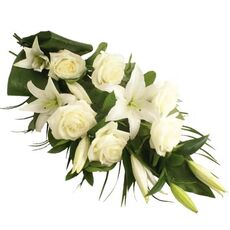
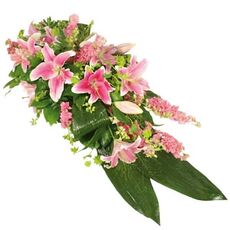
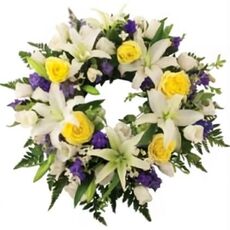
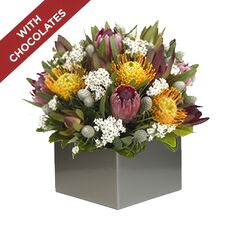
Six Funeral and Sympathy Flowers Anna Recommends Most
By now you have probably looked at thirty different sympathy products on five different websites. These six are the ones we recommend most often, in the order Anna learned to reach for them. Each one is matched to a specific situation. The "best for" line tells you which one suits the order you are about to place. What the family sees first is colour, not stems. Volume and palette register at the door. The variety names register later, if at all.
Wreaths and sheaves cluster around $145-155. Casket sprays and standing sprays start at $250 and go up. Sympathy bunches for the home start at $74.50.
One thing to know before you click on any of these. Pink Stargazer lilies cannot be sourced on every Tuesday morning in July. White roses are sometimes thin at Flemington in the second week of January. Florists handle this through substitution: same colour, same value, same emotional register. We note significant substitutions on the order. The arrangement that arrives may not be identical to the photo. It will be appropriate to the moment, which is the only thing that counts at a funeral. If a substitution is large enough to change the look of the arrangement, the team rings the sender before the build starts.
White Lily & Rose Sheath
Best for: the universal default
Anna says: the safe answer when you do not know the family's preferences, the cultural background, or what other tributes will be in the room. Three Oriental lilies and five white roses on aspidistra. Goes to the casket and home with the family afterwards. The lily buds open across the following week, so the family watches the arrangement change every day on the kitchen bench.
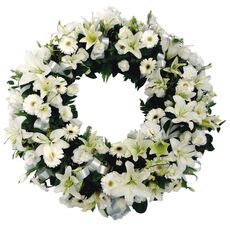
Order this › White Funeral Wreath
Best for: formal services and graveside display
Anna says: full-coverage circular wreath on a soaked foam ring. Lilies, roses, gerberas, chrysanthemums and orchids staged at mixed opening points so the wreath looks its best across the whole service. Foam reservoir gives it the longest service window of any sympathy format.
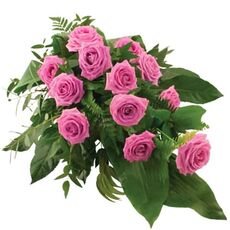
Order this › Pink Rose Sheath
Best for: a daughter's tribute to her mother
Anna says: a single-variety sheaf of around twelve mid-pink roses on aspidistra and fern. Reads as personal rather than generic. Pink rose sheaves get ordered by daughters more than any other sympathy product. The colour says you knew her, not just that you came.
Order this › Pink Lily & Rose Sheath
Best for: warmth without losing formality
Anna says: pink Stargazer lilies, pink roses, and stock spikes for fragrance. Sits between the white sheath and a celebration-of-life arrangement. Ideal when the deceased was female and the family is happy with colour but the service is still traditional.
Order this › Wreath With White & Purple Tones
Best for: someone who knew the deceased well
Anna says: white Oriental lilies, yellow roses, white orchid sprays, purple statice. The yellow does the warmth, the purple does the depth. Statice dries on the ring and the family keeps it as a keepsake. The wreath that says I knew this person.
Order this › Native Arrangement With Chocolates
Best for: sympathy to the family home
Anna says: pink mink protea, yellow pincushion, burgundy leucadendrons, silver brunia, waxflower in a metallic cube vessel. Three weeks in vase, then dries in place for months. Chocolates included. The right choice when the flowers are going to a home rather than a service.
Order this ›If you have read this far and you still want to talk it through with someone before ordering, ring us. Sympathy calls go straight to a person who can walk you through the options in five minutes.
See the full sympathy range Part Seven
How Long Funeral Flowers Actually Last
The honest answer is: it depends on the format, the stems chosen, how warm the chapel runs, and what the family does with the arrangement after the service. Below is the working timeline we use when someone asks how soon they need to order, or how the flowers will hold up at a summer service.
The service window
For a wreath in saturated foam, you can expect twelve hours plus in a temperate chapel. In a hot chapel without aircon, that drops to six to eight hours before the lilies start to soften and the rose petals begin to relax. For a sheaf, the working window is shorter because the stems sit out of water. Six hours in a cool chapel. Three to four in a warm one. The wet tissue and cellophane around the binding holds enough moisture for half a day, no more. The family watching a wreath through a service notices the lilies open across the morning. By the time the burial finishes, the wreath at the graveside is already different from the wreath that was on the chapel stand.
The delivery moment
The florist arrives at the funeral home before the family does. Most family members never see the flowers being brought in. The wreath goes on the stand at the front of the chapel, the sheaf goes onto the casket or beside it, and by the time the first mourners walk through the door, the arrangement is already in place. Nobody who comes in later knows whether the flowers arrived at 8am or 11am, only that they were there.
What happens after the service
The wreath stays at the venue or goes to the graveside. The funeral director removes it after the service or the family collects it. A wreath laid on a headstone in summer deteriorates inside 24 to 48 hours. In cool, overcast conditions it can hold three to four days outdoors. The sheaf, by contrast, comes home. Cut the binding, trim the stems at 45 degrees, put the whole thing in a tall vase. Roses give another four to five days. Lily buds open across the following week. Aspidistra leaves last weeks.
Care tips for the family
The single most useful piece of care advice we have ever given to a grieving family is the hydrangea rescue. If the head wilts, submerge it whole in cool water for thirty minutes. Hydrangeas absorb water through the bracts, not just the stems, and a full submersion brings them back when nothing else will. The rest of the care advice follows: change the water every two days. Strip any leaves that sit below the waterline. Keep the arrangement out of direct sun and away from fruit bowls (carnations and lilies are sensitive to ethylene from ripening fruit, which accelerates their decline).
Anna's bench tip
Cut the stems on a 45 degree angle every two days. Flat cuts seal against the vase floor. Angled cuts keep drinking. That single difference adds three days to the bunch. The other one most people miss: every fresh cut should happen under running water if you can manage it. Air gets sucked into the cut end the moment the stem leaves the water. An air pocket two centimetres up the stem is a stem that has stopped drinking. Cut it again under the tap.
Andrew here Funerals run on time. Florists need to too. The 2pm same-day cutoff exists because a florist sources from the wholesale market in the morning, builds in the afternoon, coordinates with the funeral director, and delivers in time. An order that comes in at 3pm for a 4pm service is asking the system to do something it cannot do reliably, and the failure when it happens is not recoverable. Order the day before where possible. If you have to order same-day, ring us on 1300 360 469 rather than going through the website. We will tell you what is possible. If anything goes wrong on the day, ring the same number first. Sympathy calls go ahead of everything else.
Why you probably will not hear back
Sympathy senders rarely hear back the way birthday senders do. The family is at a funeral, not on their phone. They walk through the chapel, then the burial, then a wake, then home. By the time anyone has space to text the senders, the texts they owe stretch to thirty or forty people. Most never get sent. If you do not hear from the family in the days afterwards, that is not a sign that something went wrong. The card you wrote is what the family kept. We hear from senders months later who finally got a thank you when the family was sorting through the cards in a drawer. Silence and success look identical at sympathy.
Part Eight
Common Questions
How soon before a funeral should I order flowers?
Ideally the day before. The florist sources stems in the morning, builds in the afternoon, and coordinates delivery with the funeral director. The order before the order is the conversation with the funeral director. The florist needs to coordinate timing with them, and the funeral director will tell you what window the venue allows. Same-day orders before 2pm are possible but tighter. After 2pm, same-day is unreliable and we will usually recommend you ring us first to see what is realistic.
Should I send flowers to the funeral or to the family home?
Either works. Flowers to the service are the formal tribute and arrive before the service starts. Sympathy to the home arrives in the days that follow, and there is no wrong day to send it. Sending to the home is always safe when you do not know where you sit in the circle.
What if the funeral notice says "in lieu of flowers"?
Honour the request and donate to the named charity. The detail most people miss is that "in lieu of flowers" notices usually refer to the service venue only. Sympathy flowers to the family home in the days or weeks afterwards are typically still welcome. If you are not sure, ring the funeral director.
What flowers are right for a Greek Orthodox funeral?
White wreaths and standing sprays are the formal expectation. Family-name ribbons in Greek script appear at services where the florist offers them. The memorial cycles fall at 40 days, three months, six months, and one year, and many families return to the same flower choice at each one. See the dedicated section above on Greek Orthodox memorials.
What if there is no service at all?
Private cremations with no service are increasingly common. Send sympathy flowers to the family home in the days following the cremation. A vase arrangement or a sympathy box works well because there is no rush and the family does not need to find a vase.
Can I send flowers if I missed the funeral?
Yes, and it is welcomed. Sympathy flowers to the home a week or two after the service often mean more than tributes at the service itself, because they arrive when the rest of the world has moved on and the family is alone with the loss. Anna heard this back from callers years later. The flowers that came late were the ones the family remembered.
What does it mean if my partner orders a casket spray?
Casket sprays are reserved for the immediate family. They lie across the top of the coffin during the service and are usually personal: favourite flowers of the deceased, specific colours, sometimes a photo tucked into the greenery. Anyone outside the immediate family should not send one.
How much do funeral flowers cost in Australia?
A sympathy bunch starts at around $74. A formal sheaf or wreath sits between $145 and $220 for standard sizes. Casket sprays and standing sprays run from $250 to $600 and up depending on size and stem selection. Delivery is $16.95 with Lily's, flat fee.
What if the florist cannot get the flowers I ordered?
Florists substitute when a specific stem is not available at the wholesale market that morning. The substitution rule we apply is same colour, same value, same emotional register. A pink rose is replaced with a pink rose of a different variety, not with a yellow daisy. We note significant substitutions on the order. If the change is large enough to alter the look of the arrangement, the team rings the sender before the build starts. If you specifically need a stem that cannot be substituted, for example a Greek family asking for white roses only, tell the florist when you order. They will source from a second wholesaler if they have to.
Do you deliver to small country towns?
Mostly yes. We have 800+ partner florists across Australia and reach almost every town with a funeral home in it. There are some genuinely remote regions where the closest florist is an hour and a half away and same-day is not realistic. If you put the address into the order page and the system accepts it, we have a partner florist in or close to the area. If the order does not go through, ring us on 1300 360 469 and we will tell you what is possible from there.
Should I write the deceased's name on the card?
For most Australian funerals, yes. Address the family ("With deepest sympathy to the Smith family" or similar). For Aboriginal and Torres Strait Islander funerals, confirm Sorry Business protocols first. Many Aboriginal communities do not speak the deceased's name during the mourning period. "Thinking of you and your family during this sad time" avoids any misstep.
What if I get the flowers wrong?
Ring us. 1300 360 469. The team can pull an order before it goes out and put a different one through if there is time. After the service, the most useful thing you can do is send sympathy flowers to the home with a card that acknowledges the gesture. The family rarely remembers what arrived at the service. They almost always remember what arrived at the house.
A note from Siobhan
The kitchen table
Siobhan Thomson, Co-Founder
I do not have words for what flowers are doing at a funeral. Seventeen years in this business and I still do not. The closest I have come is something Anna said to me years ago and I have been quoting her ever since: a wreath goes in the bin or stays at the grave, but a sheaf comes home with the family. The family arrives back at the house after the service. The kettle is on. Someone has put out sandwiches. And the flowers from the chapel are now on the kitchen bench, still changing, still opening, for another week. That is the part I think about when someone rings here in tears at nine in the morning trying to sort out an order for an afternoon service. The flowers do not fix anything. They sit on the table while the family does the impossible work of being a family without the person who is no longer in it.
Months later the flowers are gone but the card is in a drawer or pinned to the fridge. The flowers were the moment. The card is the keeping.
If you are stuck, ring us. 1300 360 469. Seventeen years and we still answer the phones ourselves.
Further Reading
If you want depth on the related decisions, these three pieces cover the corners this guide does not.
What to Write on a Funeral Flowers Card Card messages by relationship, what not to write, and what to do when the funeral follows a tradition you are not familiar with. The Symbolic Meaning of Funeral Flowers What flowers actually mean across Australian funeral traditions, beyond the lookup-table answers most guides stop at. How to Send Flowers to a Funeral A practical walk-through covering venue versus home, timing windows, and what to do when you find out late.
If the flowers are going to a family home rather than a service, our home sympathy range is the better starting point. Vase arrangements, boxed sympathy, native arrangements that hold for weeks rather than days.
See sympathy flowers for the home
Lily's Florist delivers Australia-wide through a network of 800+ partner florists.
23,603+ verified reviews on our reviews page.
Same-day delivery when you order before 2pm weekdays or 10am Saturdays.
Questions? Ring 1300 360 469
About the Authors
This guide was written by Siobhan Thomson with research from Anna, qualified florist, and operational input from Andrew Thomson. The three of us between us have handled close to 100,000 sympathy orders since 2006. Read our full story.

Andrew, Ivy, Siobhan and Asha. Hobart, June 2024.