Same Day Flowers Delivery - Australia Wide!

What Is A Lily Flower? All Your Questions Answered
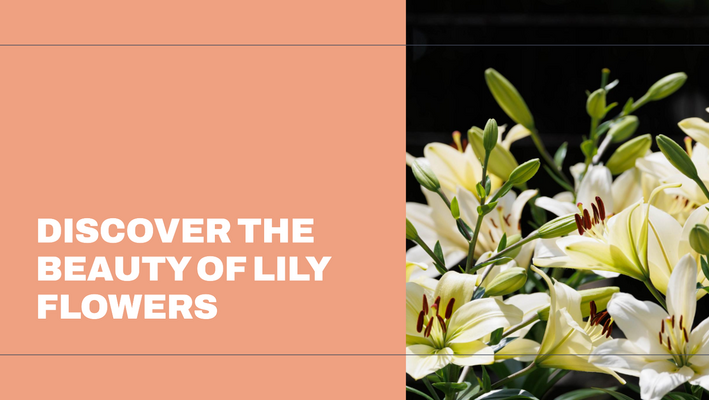
The Flower We Named a Business After
We are Lily's Florist. Not Rose's, not Orchid's, not Daisy's. When Andrew and I built this brand in 2009, we picked the lily, partly because the name worked (it rolled off the tongue, it fit on a logo, it looked right on a delivery van) and partly because the lily is the cut flower that does the most. Six tepals, six stamens loaded with orange pollen, a fragrance that can fill a hospital ward or an entire apartment floor, and a stem that produces three to eight blooms over a week from a single cut. No other flower gives you that kind of return.
Anna trained in Auburn, North Carolina, worked on the bench for fifteen years, and has stronger opinions about lilies than anyone I have met. Pollen removal alone could fill a book. The cat toxicity conversation, which she has had thousands of times on the phone and in person, is the one she takes most seriously. Which varieties come through Flemington in June, which ones vanish until October, which ones smell so strong that a shared hospital ward will complain. She knows it all. So when someone types "what is a lily flower" into Google, we take it sort of personally. This is our flower.
Before Anything Else: Is the Flower You're Thinking of Actually a Lily?
True lilies belong to the genus Lilium. Around 80 to 115 species, depending on which botanist is counting. They grow from scaly bulbs (the kind where each scale peels off individually, unlike a tulip or an onion which wraps in a papery tunic). The flowers sit at the top of a tall stem and open into six tepals, which is the botanical term for what most people call petals, though three of them are technically sepals that just happen to look identical.
The confusion starts because dozens of plants carry "lily" in their common name and not one of them is a true lily. This is where Anna's phone experience comes in.
I used to take calls at our Pottsville office. Ten a week, minimum, someone would ask for lilies. About half the time, once we started talking, it turned out they wanted calla lilies. The tall white trumpets you see at weddings. Those are Zantedeschia, a completely different family. Or they wanted Peruvian lilies, which are alstroemeria. Or peace lilies, which are a houseplant. Price, appearance, care, toxicity. All different. A true lily is the big one with the prominent stamens and the strong perfume. If someone described "the cup-shaped white one on the long green stem," that was almost always a calla, not a lily.
Calla Lily (Zantedeschia)
Not a lily. Family Araceae. The tall, elegant, funnel-shaped bloom popular at weddings. Mildly irritating to cats (mouth and throat), not the deadly kidney failure that true lilies cause.
Daylily (Hemerocallis)
Not a lily either, but still severely toxic to cats. Each bloom lasts a single day (hence the name). Garden flower, rarely used as a cut flower. Looks similar enough to confuse people.
Peace Lily (Spathiphyllum)
An indoor plant, not a cut flower. White spathe. Causes mouth irritation in cats from calcium oxalate crystals but does not trigger kidney failure.
Peruvian Lily (Alstroemeria)
Family Alstroemeriaceae. Excellent cut flower with 10 to 14 day vase life. Spotted petals. Low toxicity to cats. Often confused with true lilies in mixed arrangements.
Lily of the Valley (Convallaria)
Tiny white bells. Different family. Contains cardiac glycosides, toxic to cats AND humans. Dangerous, but through a different mechanism than Lilium.
Gymea Lily (Doryanthes)
An Australian native that grows to 6 metres tall. Not a true lily and not commonly sold as a cut flower. Non-toxic to cats.
The naming chaos has real consequences. Someone googling "are lilies toxic to cats" needs to know which plant they are actually asking about. The answer for a Lilium is: catastrophically yes. The answer for a peace lily is: mild irritation. Lumping them together is irresponsible, and most competitor articles do exactly that.
Lilies and Cats: The Conversation Anna Has Before Anything Else
Every part of a true lily (genus Lilium) is toxic to cats. Petals, leaves, stems, pollen, the water in the vase. A cat licking pollen from its own fur while grooming can develop acute kidney failure within 24 to 72 hours. Science still has not identified the exact compound responsible, which is unusual for a toxicity this well documented. Daylilies (Hemerocallis) cause the same kidney damage despite being a different genus entirely. Dogs may get an upset stomach but do not develop the kidney failure.
If your cat has had any contact with a true lily or daylily, including brushing against pollen, chewing a leaf, or drinking the vase water, contact a veterinarian immediately. Treatment within 18 hours gives the best chance of recovery. After 18 hours, kidney damage may be irreversible. Initial signs include vomiting, lethargy, drooling, and loss of appetite, usually within 12 hours of exposure.
This is the first thing I say when someone mentions a cat. Before colours, before price, before anything. Lilies and cats do not go in the same house. I have had customers ring in tears because nobody told them. The pollen is enough. A cat walks past the arrangement, brushes the stamens, grooms its coat that evening, and by morning it is at the emergency vet. I would rather lose a lily sale than have that phone call.
ASPCA data says 73% of cat owners whose cats were exposed to a lily did not know the plant was toxic. That number has stayed with me since I first read it. Three out of four people did not know. So I tell everyone. Every time.
| Plant | Cat Toxicity Level | Effect |
|---|---|---|
| True lilies (Asiatic, Oriental, Tiger, Stargazer, Easter, Casa Blanca) | Severe | Kidney failure, potentially fatal |
| Daylilies (Hemerocallis) | Severe | Same kidney damage as true lilies |
| Lily of the valley (Convallaria) | Toxic | Heart rhythm disruption |
| Gloriosa / flame lily | Toxic | Multi-organ failure |
| Peace lily (Spathiphyllum) | Mild | Mouth and throat irritation |
| Calla lily (Zantedeschia) | Mild | Mouth and throat irritation |
| Peruvian lily (Alstroemeria) | Low | Mild stomach upset |
If you have a cat and want flowers that are safe, we have plenty of options. Roses, gerberas, sunflowers, orchids, snapdragons, and the entire Australian natives range (banksias, proteas, leucadendrons) are all cat-safe. Our guide to flowers harmful to pets goes deeper, and we have a full list of pet-friendly alternatives that brighten a home without the risk.
Which Lilies Actually End Up in a Bouquet
The Royal Horticultural Society classifies lilies into nine horticultural divisions, established in 1964 and still the worldwide standard. Most of those divisions will never appear in a flower arrangement. Divisions II through IV are specialist growers' territory. Division IX is wild species. A customer ordering lilies from a florist will encounter three, maybe four divisions, and the differences between them affect price, fragrance, colour range, and how long the flowers hold.
When people ask for "a lily bouquet" they almost always mean Orientals or LA hybrids. Those are what fills the cool room at every wholesaler I have worked with. Asiatics are the affordable option. Great colour range, no scent at all, lower price. If someone says they want "the really perfumey ones," Orientals. Stargazer, Casa Blanca, those are the names people recognise. If they say "the big ones that are not too overpowering," I steer them toward an OT hybrid, which is an Oriental crossed with a Trumpet. You get the size without the scent knocking you sideways in a small room.
Asiatic Hybrids (Division I)
Upward-facing blooms, wide colour range from white through yellow to deep red. No fragrance at all. The most affordable lily in the wholesale market. Three to six flowers per stem. Available year-round.
Oriental Hybrids (Division VII)
The premium lily. Blooms up to 23cm across. Spotted, freckled, strongly fragrant. Stargazer and Casa Blanca are the iconic varieties. Available year-round but prices peak in winter.
LA Hybrids (Division VIII)
Longiflorum crossed with Asiatic. Larger flowers than Asiatics, slight fragrance, excellent vase life. The fastest-growing segment in the cut flower industry. Reliable and versatile.
OT Hybrids (Division VIII)
Oriental crossed with Trumpet. Huge blooms, medium-strong fragrance (present but not overpowering). Robust stems. The "best of both worlds" lily. Growing in popularity at wholesale.
Longiflorum / Easter Lily (Division V)
White trumpets, moderate fragrance, elegant. Forced for the Easter market specifically. In Australia, growers time bulbs to bloom in March and April rather than Northern Hemisphere spring.
Double Lilies / Roselilies
A breeding revolution. At least 18 petals instead of six. Pollen-free, milder fragrance, up to four days longer vase life. Opens to resemble a garden rose. More on this below.
The fragrance question everyone asks
Lily fragrance is the most polarising thing in floristry. People either want the room filled with it or they want it nowhere near them. Anna learned quickly on the phones that the first question for any lily order should be where the flowers are going. A hospital shared ward, an office reception desk, a small bedroom, and a large open-plan living room all need different lilies.
Our hospital flowers guide covers the scent restrictions that some wards enforce. Short version: if the flowers are going to a shared room, Asiatics or LAs are the safer choice. One Oriental stem on a bedside table and the patient two beds over will know about it.
The Pollen-Free Revolution That Changed Everything
In 1993, a Dutch breeder named De Looff Lily Innovation started crossing Oriental lily varieties to produce something the industry had never seen: a lily with so many petals that the stamens were effectively bred out. The first two varieties, Belonica and Fabiola, hit the market in 2010 after seventeen years of development. The brand name is Roselily. By 2016, global distribution had begun. Industry publication THURSD called it one of those revolutions in floriculture that you see only a few times in a working career.
Standard lilies carry six stamens, each loaded with orange pollen that stains clothing, table linen, carpet, and skin on contact. Roselilies have at least eighteen petals (triple the standard six) and produce no pollen at all. The fragrance is deliberately bred softer. Vase life runs up to four days longer than single-flowering Orientals. The blooms open to a layered, rose-like form that photographs differently from any other lily.
Double lilies changed weddings for me. The old problem was always pollen. A bride brushes past the table arrangement and there is an orange smear on white satin that will not come out without a solvent. I have watched it happen. With Roselilies, the pollen problem disappears. They last longer in water, the scent is there but it does not overpower a small marquee, and they look different enough that guests notice.
Pollen-free does not mean cat-safe. The plant itself is still a Lilium. The toxin is in the tissue, not the pollen. So the staining problem is solved but the cat problem is not. I have had people assume "pollen-free" meant "safe for pets" and it scares me every time.
The variety range is growing. Current Roselily colours include white, light pink, deep pink, and rose-red. Named varieties include Samantha, Natascha, Sara, Viola, Elena, Aisha, Isabella, and Lucia. Availability through Australian wholesale markets has increased steadily since 2018, though pricing remains above standard Orientals.
What the Colour Tells You
Lily colour meanings carry real weight in certain cultural contexts. White lilies at an Easter service are not a random choice. Pink lilies for a Chinese Mother's Day delivery carry a specific wish. Getting this wrong is not a disaster, but getting it right shows the sender paid attention.
There is something strange about being the business named after the lily and also being the business where Anna talks more people out of lilies than into them. Cat owners, hospital wards with scent restrictions, small apartments. We steer them to roses, natives, gerberas. Our namesake flower is the one we say no to most often. But when it is right, when the occasion fits and the household is safe, nothing else comes close.
White
Purity, sympathy, rebirth. Weddings, funerals, Easter, baptisms. Nine times out of ten on Anna's phone calls, white lilies meant sympathy. The tenth time was a wedding.
Pink
Grace, admiration, prosperity. The most popular colour for Mother's Day lily orders. In Chinese culture, pink lilies are associated with motherhood specifically, which makes them a thoughtful choice for customers sending to Chinese-Australian families.
Red
Passion, deep love. A romantic alternative to roses that most people have never considered. Less common as a cut lily, which gives it a novelty that red roses lost somewhere around the 50th Valentine's Day.
Yellow
Happiness, gratitude, friendship. Anna's go-to recommendation for get well orders. In some Asian contexts yellow carries caution, so she always checked before confirming.
Orange
Confidence, encouragement, pride. The colour people forget about when ordering lilies, which is a shame. Bold enough to feel celebratory without the romantic connotation of red. Good for congratulations and career milestones.
Purple
Royalty, achievement, admiration. Graduation is the big one. Anna noticed that purple lily orders spiked every November and December without fail.
Lilies across cultures in Australia
Australia is one of the most multicultural countries in the world and the meaning of a lily shifts depending on who is receiving it. Anna figured this out early on the phones. A customer once asked if white lilies were appropriate for a Chinese funeral. She checked before she answered, because getting flower customs wrong at a funeral is the kind of mistake that stays with a family. White lilies are appropriate. The Chinese word for lily (bai he, 百合) sounds similar to a phrase meaning "a hundred years of harmonious union" (bainian haohe, 百年好合), and white lilies appear at both weddings and funerals across Chinese-Australian communities. In Japanese tradition, white lilies (yuri, 百合) represent chastity and purity and are standard at funerals. Orange lilies in Japan carry a connotation of revenge, making them a poor choice for a gift without context.
Hindu tradition associates lilies with Saraswati, goddess of knowledge and the arts. They appear at festivals like Vasant Panchami and in South Indian wedding decoration. In Western Christian tradition, the white Madonna lily (Lilium candidum) became the symbol of the Virgin Mary centuries ago. It appears in Annunciation paintings across European art history and remains the dominant flower at Easter services and Christian funerals. Our guide to funeral flowers covers how to choose the right arrangement for different cultural traditions.
The lily is also the May birth flower and the traditional flower for a 30th wedding anniversary.
Pollen: What Anna Tells Every Customer
Lily pollen is produced by the anthers, which sit on top of the six stamens in the centre of the flower. The pollen is orange, sticky, and leaves a stain that behaves differently from any other stain you will encounter at home. It bonds to fabric fibres on contact. Rubbing it in makes it permanent. Heat from a clothes dryer sets it beyond recovery. The pollen also erodes petal tissue it lands on, shortening the vase life of the flower itself.
Remove the stamens as soon as a bloom starts opening. While the anthers are still slightly damp, they come out clean. Pinch with a dry tissue and pull gently straight out. Do not use your bare fingers. The oils on your skin push pollen grains deeper into fabric if you touch it later. Once the pollen has started to dust, you are late but still do it. Better late than covered.
If pollen lands on clothing or a tablecloth, do not rub. Press a strip of sticky tape over the pollen, gently, and lift. The grains stick to the adhesive and peel away from the fabric. Then put the fabric in direct sunlight for a few hours before you wash it. Lily pollen is photosensitive. UV light breaks the pigment compounds down. Sunlight first, then wash. Never the dryer until the stain is gone.
The thing people forget is that lilies produce new blooms over seven to ten days. Each bud opens with a fresh set of stamens. So you are not removing pollen once. You are checking the arrangement every couple of days as new flowers open. It takes ten seconds per bloom. The reward is a clean tablecloth and flowers that hold longer because pollen is not sitting on the petals eating into the tissue.
Double lilies (the Roselily varieties mentioned above) bypass this entirely. No stamens, no pollen, no maintenance. For anyone who loves the look of lilies but has had enough of the pollen routine, doubles are the answer. Our Easter flowers guide covers Anna's full pollen management approach in a seasonal context.
How to Make Lilies Last
Cut lilies typically hold for 7 to 14 days depending on variety, temperature, and care. Asiatics tend to outlast Orientals by a few days. Double lilies push the upper end. The sequential blooming is what makes them exceptional value: a single stem with five buds will open one bloom, then another, then another over the course of a week. You are not paying for one flower. You are paying for a sequence.
Cut at 45 degrees
A flat cut lets the stem seal against the vase bottom and block water uptake. The angled cut keeps the surface area open. Recut under running water so air does not enter the xylem.
Strip submerged leaves
Every leaf below the waterline rots. The rot breeds bacteria. Bacteria clogs the stem. Anna has seen $150 arrangements fail in four days because nobody stripped the leaves.
Use the flower food sachet
The packet that comes with the bouquet is not a suggestion. It contains a biocide that inhibits bacterial growth and a sugar that feeds the blooms. Using it adds days.
Keep away from fruit
Ripening fruit emits ethylene gas, which ages cut flowers faster than almost anything else in a kitchen. Anna learned this one the hard way with a fruit bowl on a bench in Kingscliff. Move the bananas. Seriously.
Cool location, no direct sun
A lily in an 18°C room lasts significantly longer than one at 28°C. Cool air slows the metabolism and the bloom holds. Anna kept her own arrangements near the back door in Casuarina for exactly this reason. Direct afternoon sun is the worst.
Buy with buds, not open blooms
Tight buds showing colour mean the flower has stored enough sugar to open properly. You get more days of progressive blooming and the arrangement changes every morning.
More detail in our cut flower care guide, which covers the full basics from water temperature to vase cleaning.
When to Buy Lilies in Australia
Asiatics, Orientals, and LA hybrids are available year-round through Australian wholesale markets. Greenhouse production and climate-controlled growing have made seasonality less of a barrier than it once was. But prices move, and availability varies.
Spring and early summer, October through December, is when Australian growers are in full outdoor production. Supply peaks, prices drop, and the quality of stems coming through Flemington in Sydney and Epping in Melbourne is as good as it gets. A lily cut from a local grower, driven to market at 3am, picked up by a florist by 6am, and in an arrangement by noon has had about twelve hours from field to vase. That stem has an edge over anything imported.
Winter is tighter. June through August, domestic supply drops and more stems come in through cold chain from the Netherlands. Still good flowers, still reliable. But prices climb because the grower economics are harder. If you are buying lilies regularly for a home or office and you want the best value, spring is the window.
Easter lilies, the Longiflorum type, are forced specifically for the Easter market. In Australia, Easter falls in autumn so the growers here time their bulbs for March and April, which is a different forcing cycle from the Northern Hemisphere. By May, Easter lily supply drops sharply.
The Sydney Flower Market at Flemington turns over more than $150 million annually and accounts for roughly 75% of wholesale cut flower trade in New South Wales. Melbourne's Epping market supplies Victoria and the southern states, and Rocklea in Brisbane covers Queensland and the north. Most lily bulbs originate from Dutch breeding programs. Australian growers import those bulbs and grow the stems locally, which is how a flower bred in the Netherlands ends up in a bouquet arranged by a florist in Parramatta or Toowoomba.
Lily's Florist Lily Arrangements
All available for same day delivery Australia-wide. Order before 2pm weekdays or call 1300 360 469.
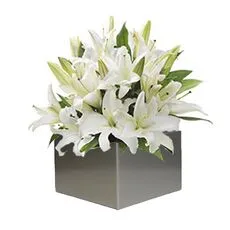
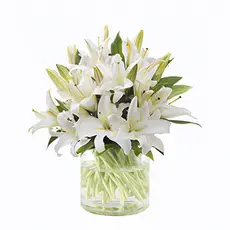
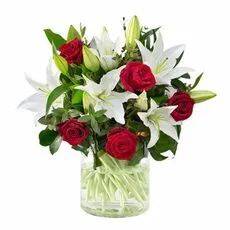
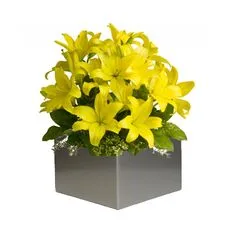
Browse the full range at lilysflorist.com.au/lilies. All lily orders sourced through our network of 800+ partner florists. 22,600+ verified Feefo reviews. Trusted Service Award 2024, 2025, and 2026.
VA, verified customer, September 2025 — Lily & Rose Bunch on Feefo
Anna on VA's Order
VA ordered from New Zealand on a Sunday evening for a delivery in Perth. She could not see the flowers, could not smell them, could not hand them over. The entire transaction runs on trust: that the partner florist will pick the right lilies at the right stage of opening, that the roses will be conditioned properly, that the bunch will arrive looking like the photo on the website or better.
The Lily and Rose Bunch pairs Oriental lily stems with roses and seasonal greenery. Lilies at the right bud stage are critical here. Too tight and they sit closed for days looking underwhelming. Too open and the petals are already past their peak by delivery. The florist needs to pick stems where at least one bloom is showing colour and the remaining buds are plump enough to open over the following week. VA's recipient sent photos back. The flowers were open. The florist got the bud stage right.
Phil, verified customer, December 2025 — Lily & Rose Bunch on Feefo
All reviews sourced from Lily's Florist verified Feefo reviews. 22,600+ reviews across the network.
Looking for lilies for a specific occasion? Our guides cover funeral flower etiquette, Mother's Day flowers, and Easter flowers in detail.
Shop All Lilies Why We're Called Lily'sAbout the Authors

Blog Categories
Recent posts
- The Most Fragrant Flowers You Can Send (and the Ones That Disappoint)
- Easter Flower Gifting Australia
- What Is A Lily Flower?
- Why Australian Natives Outlast Every Other Flower in a Gosford Office or Apartment
- What 17 Years of Orders Taught Us About Toowoomba’s Flower Tastes
- Get Well Flowers That Actually Help: - 20 Years of Stories and Advice from the Shop Floor